Fired or silenced? Cherry Hill assistant principal says whistleblowing led to retaliation

Ben Shore
• 6 min read
Fired or silenced? Cherry Hill assistant principal says whistleblowing led to retaliation
By Benjamin Shore | Investigative Reporter
Fired or silenced? Cherry Hill assistant principal says whistleblowing led to retaliation
By Benjamin Shore | Investigative Reporter
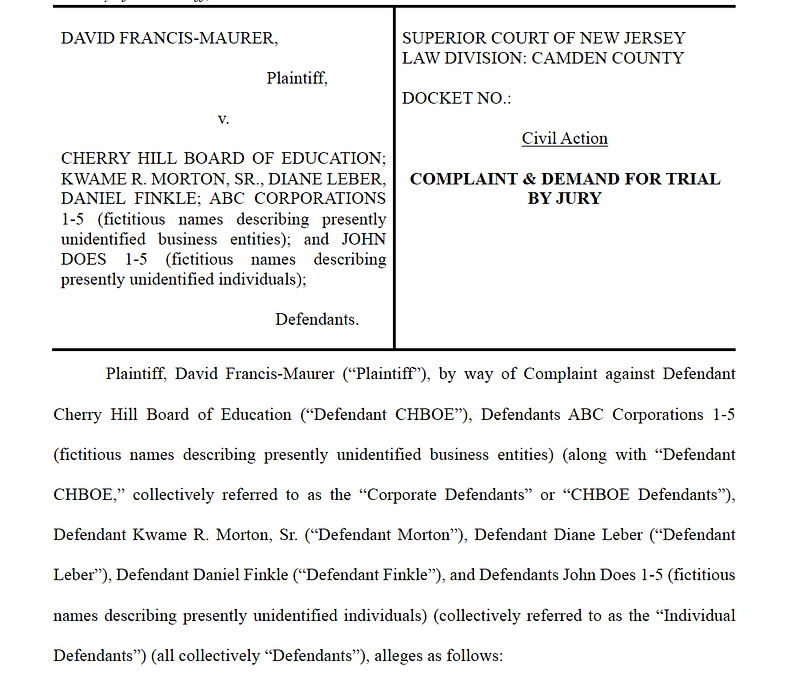
An assistant principal at Cherry Hill High School East says he was shown the door after sounding alarms about discrimination and safety. In a new lawsuit, David Francis-Maurer alleges the district non-renewed his contract, then sidelined him on administrative leave after he reported what he believed were policy violations and bias inside the school. He sues the Cherry Hill Board of Education along with Superintendent Kwame R. Morton Sr., HR Director Diane Leber, and Principal Daniel Finkle, accusing them of retaliation under New Jersey’s Conscientious Employee Protection Act and discrimination under the Law Against Discrimination.
The District responds:
“We are aware of the lawsuit that was filed against Cherry Hill Public Schools by a former administrator. The District cannot comment on pending litigation or on personnel matters other than to state that it categorically denies allegations of wrongdoing. . . We are steadfast in our commitment to fostering a safe, supportive, and inclusive environment for every student and staff member. Our policies and practices are designed to ensure all individuals are treated with dignity and respect. We will continue to uphold these standards and maintain a positive educational atmosphere throughout all of our schools.” said Nina Baratti Public Information Officer.
Silence From the Top: Board Leadership Dodge Questions:
Board President Gina Winters and Board Vice President Adam Greenbaum, who are also up for re-election, did not respond to repeated requests for comment.
The allegations:
Francis-Maurer, an administrator since July 2023, says he raised concerns about staff conduct, student safety protocols, and the climate for protected identities, and that instead of fixing problems the district fixed its sights on him. The filing frames the case as a classic whistleblower narrative, linking the timing of internal complaints to a cascade of discipline and, ultimately, a lost job.
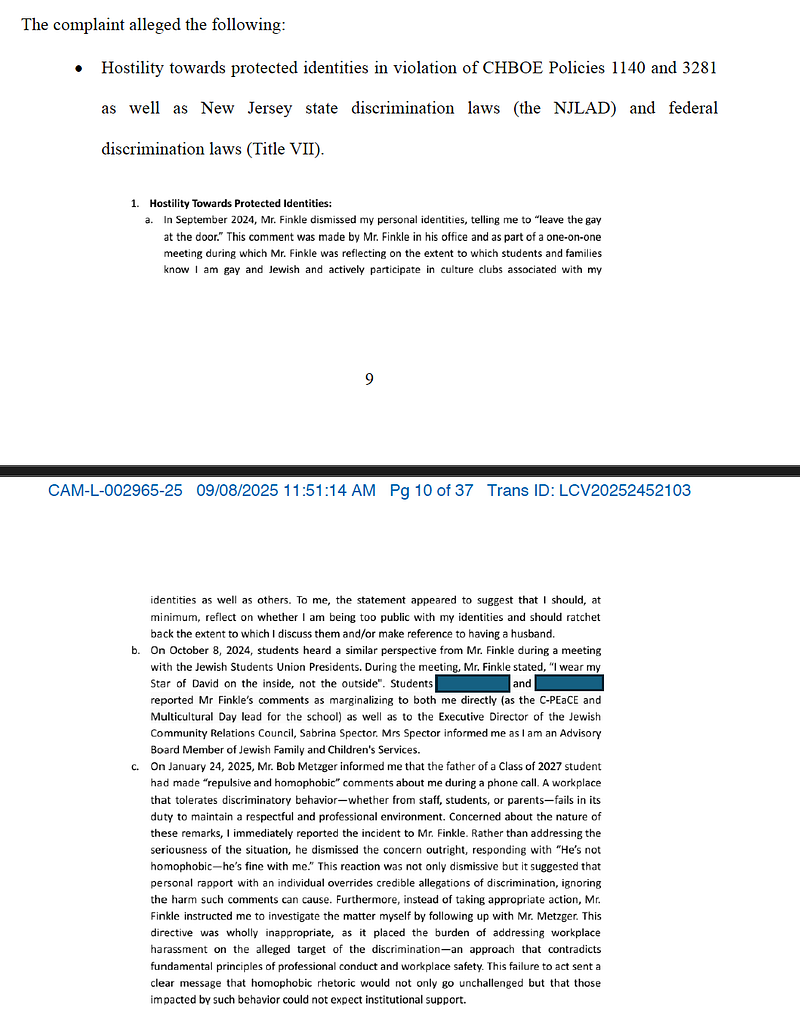
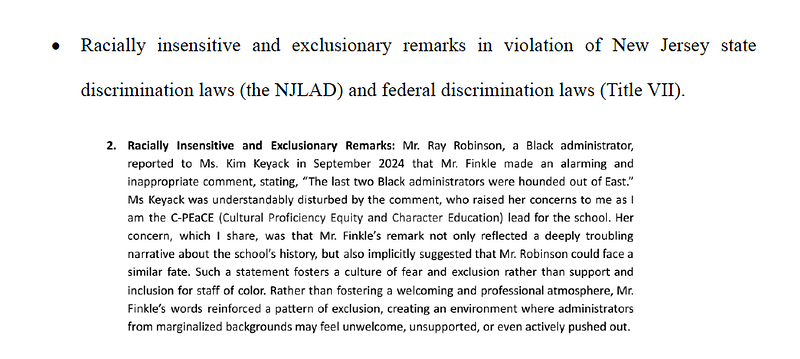
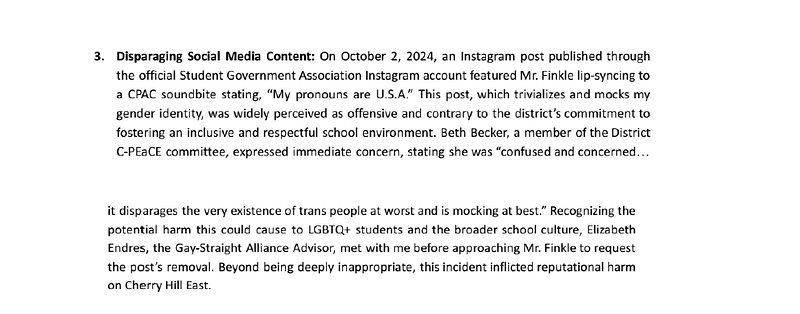
Some of the sharpest allegations center on the principal. Early in the 2024–25 school year, Finkle allegedly told Francis-Maurer to “leave his identities at the door,” a remark the plaintiff understood to target that he is gay and practices Judaism with his family. Around the same time, a Student Government Association Instagram video featured Finkle lip-syncing “My pronouns are U.S.A.,” which the complaint says mocked gender identity. Later that fall, during a meeting with students, Finkle allegedly said, “I wear my Star of David on the inside, not the outside.” The plaintiff says he reported these remarks up the chain, only to see little action and more hostility.
The paper trail matters here. On Feb. 24, 2025, Francis-Maurer sent a six page complaint to the superintendent. It cataloged alleged policy lapses including drug testing rules, field trip supervision, and staff responses to reports of suicidal ideation, along with concerns about discriminatory comments and social media content. The next day, for the first time that school year, Finkle filed a formal observation rating Francis-Maurer “partially effective” on two of seven standards and leaving one standard incomplete, and within days the administrator was told a performance improvement plan was coming.
By April, the PIP arrived. The complaint points out the plan ran April 10 to May 12, straddling spring break and a student trip, and ending just before the statutory deadline to decide non-tenured renewals, which the plaintiff says shows pretext. On May 13, he was non-renewed. The next week, amid word of a student and parent walkout, he was summoned to a “Mandatory Monday Meeting,” questioned about whether he would lead the protest, then placed on leave on May 19, instructed not to interact with students or parents while the district investigated.
The suit also contrasts his treatment with what it describes as lax enforcement elsewhere. It reproduces messages and describes a FaceTime call between the principal’s secretary and a student around the walkout, which the plaintiff characterizes as inappropriate student contact, and says that staffer was not disciplined.
Through the summer, the dispute moved into the formal channels that follow a non-renewal. Francis-Maurer says he received a Statement of Reasons on June 13, asked for a Donaldson hearing on June 16, and got a Rice Notice on June 26. He also says he never received findings from any investigation into his February complaint or the allegations tied to his leave.
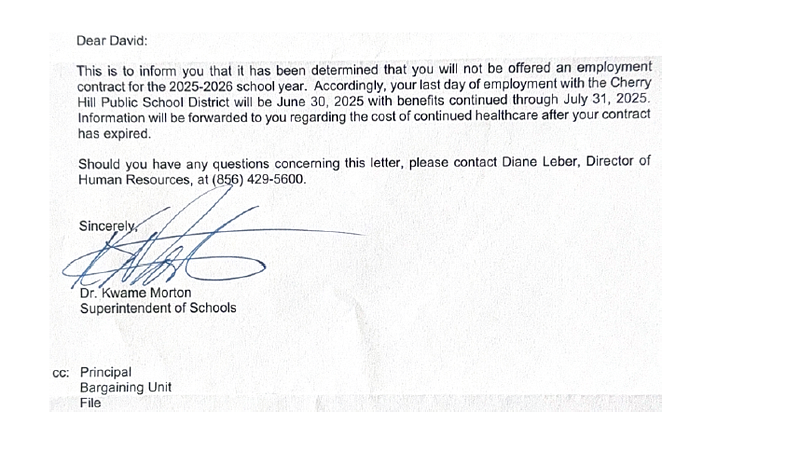
Two statutes anchor the legal theory. CEPA, New Jersey’s whistleblower law, protects employees who disclose, object to, or refuse to participate in conduct they reasonably believe is unlawful or contrary to public policy. The NJLAD bars discrimination and retaliation based on protected traits, and allows individual liability for those who aid and abet. The complaint pleads both, tying the sequence of internal reports, negative evaluations, the PIP window, and the non-renewal to an alleged campaign of retaliation.
“We are lucky to have such an expansive statute in place for these instances. The NJ LAD provides enormous protection for employees who endure this type of adverse employment action.” said Phyllis Widman, an attorney with The Law Offices of Eric A. Shore.
What the docket shows now is a case in its early innings. The eCourts jacket lists the matter as Francis-Maurer v. Cherry Hill Board of Education, docket CAM-L-002965–25, filed Sept. 8, 2025 in Camden County Civil Part, Track 3, with Judge Michael J. Kassel assigned. Entries to date include the complaint filing, a track assignment notice, general correspondence and a related clerk’s notice, and a consent order on Sept. 17. The case is active, with no trial date posted.
The district will likely argue that performance, not protected activity, drove its decisions, that the PIP reflected coaching, and that the walkout posed independent concerns warranting leave. The plaintiff calls that pretext and points to timing, prior sign offs on his annual performance reviews, and what he says are contemporaneous emails and calendars that back his story. Those are the records to watch as discovery unfolds.
Bottom line, beyond one administrator’s job, the suit tests how a large suburban district enforces its own policies on discrimination, safety, and staff student boundaries, and how far New Jersey’s whistleblower and anti discrimination protections reach inside public schools.
Editor’s note: this story concerns pending civil litigation. The claims described are allegations from court filings and other public records. The defendants dispute the allegations, or have not yet had a full opportunity to respond in court. We will update if we receive substantive comment or new filings.
Send tips: shoreinvestigates@gmail.com
By Ben Shore on September 19, 2025.
Exported from Medium on November 11, 2025.
Stay Informed
Get our latest investigative stories delivered directly to your inbox. No spam, just quality journalism.
Comments (0)
Sign in to join the conversation
No comments yet. Be the first to share your thoughts!
More Stories
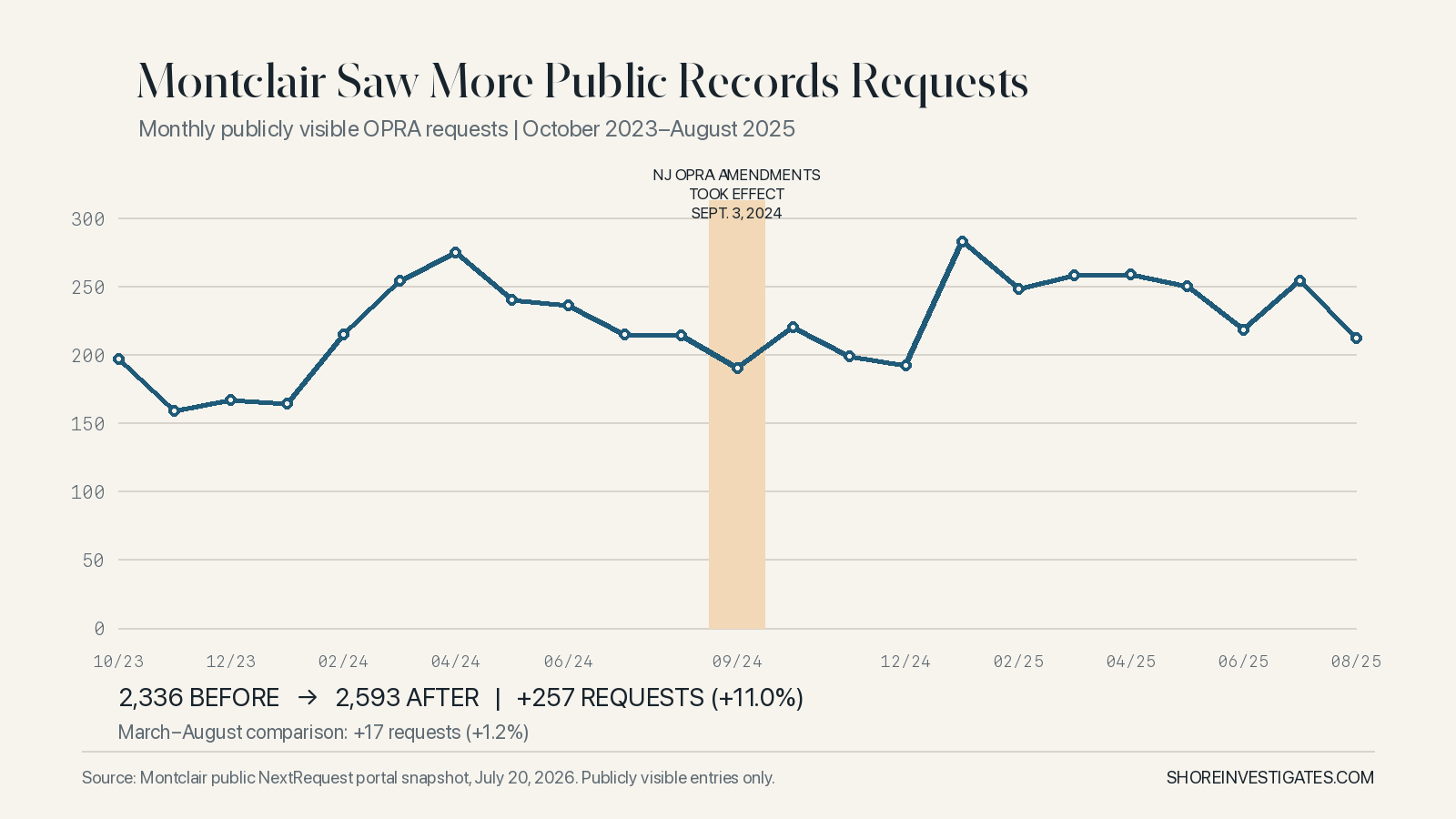
Montclair Saw More Public Records Requests After New Jersey Changed OPRA
Montclair’s public portal recorded 257 more requests in the 11 months after New Jersey’s 2024 OPRA amendments—an 11% increase.
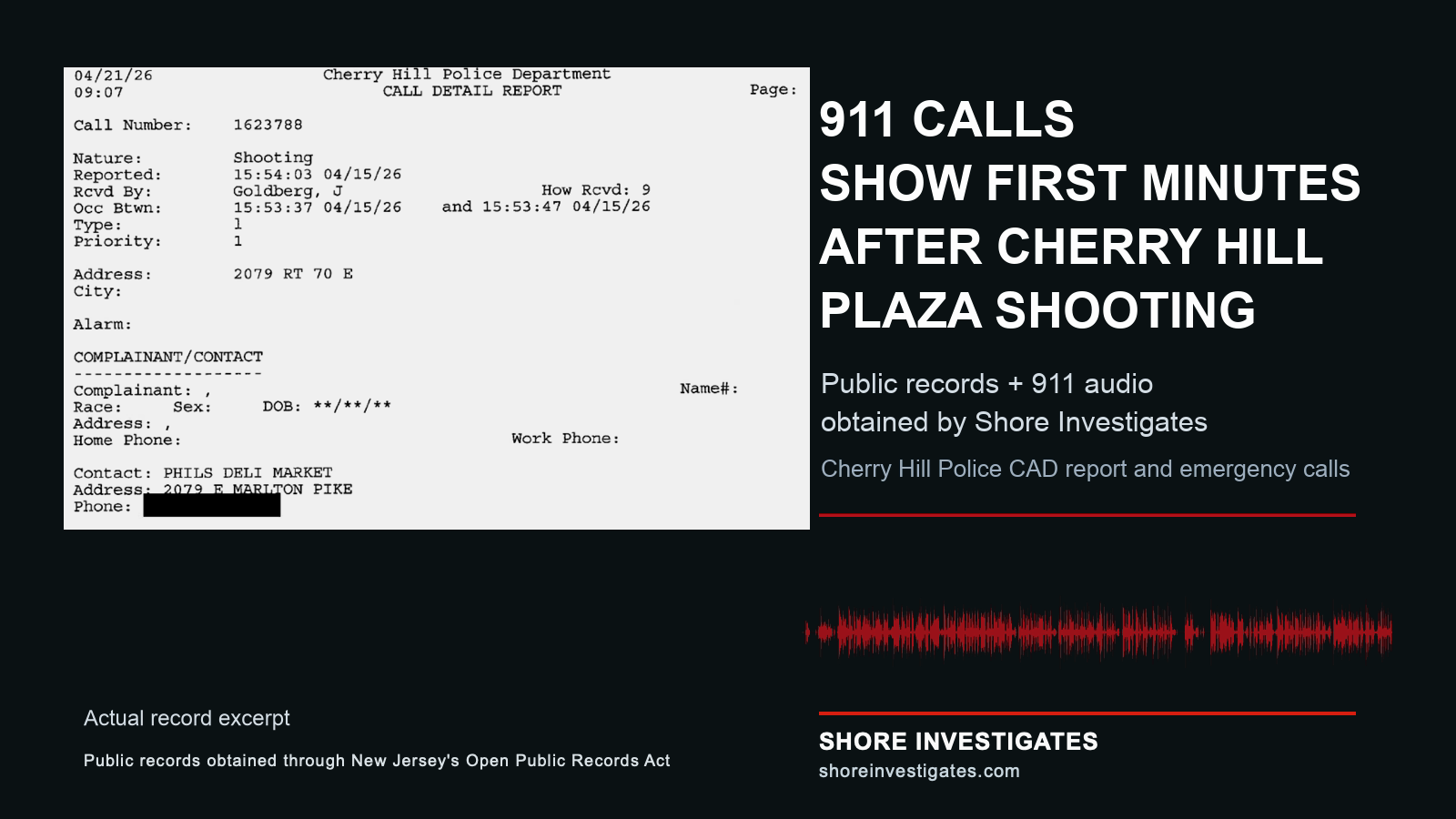
911 Calls, Police Logs Show First Minutes After Cherry Hill Shopping Plaza Shooting
Public records obtained by Shore Investigates show the first minutes after a man was reported shot outside a Cherry Hill shopping plaza. The 911 calls and dispatch records show how the response unfolded before police and prosecutors announced charges two days later.
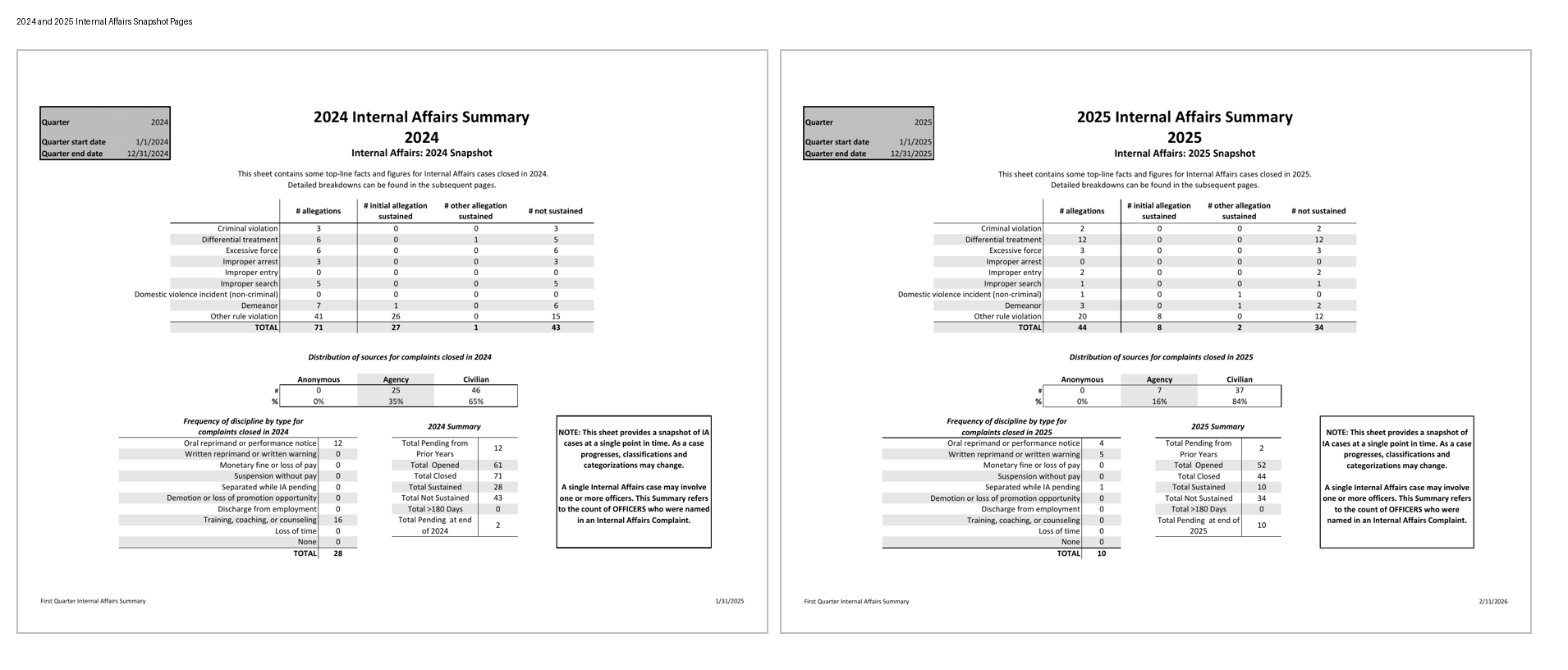
What Cherry Hill’s Internal Affairs Reports Show, and How Residents Can File a Complaint
Cherry Hill Police closed 71 internal affairs cases in 2024 and 44 in 2025, according to annual reports that show most closed complaints came from civilians. The records also outline how residents can file a complaint, what the department’s findings mean, and how discipline is tracked in the aggregate.