What Cherry Hill’s Internal Affairs Reports Show, and How Residents Can File a Complaint
Cherry Hill Police closed 71 internal affairs cases in 2024 and 44 in 2025, according to annual reports that show most closed complaints came from civilians. The records also outline how residents can file a complaint, what the department’s findings mean, and how discipline is tracked in the aggregate.

Ben Shore
• 6 min read
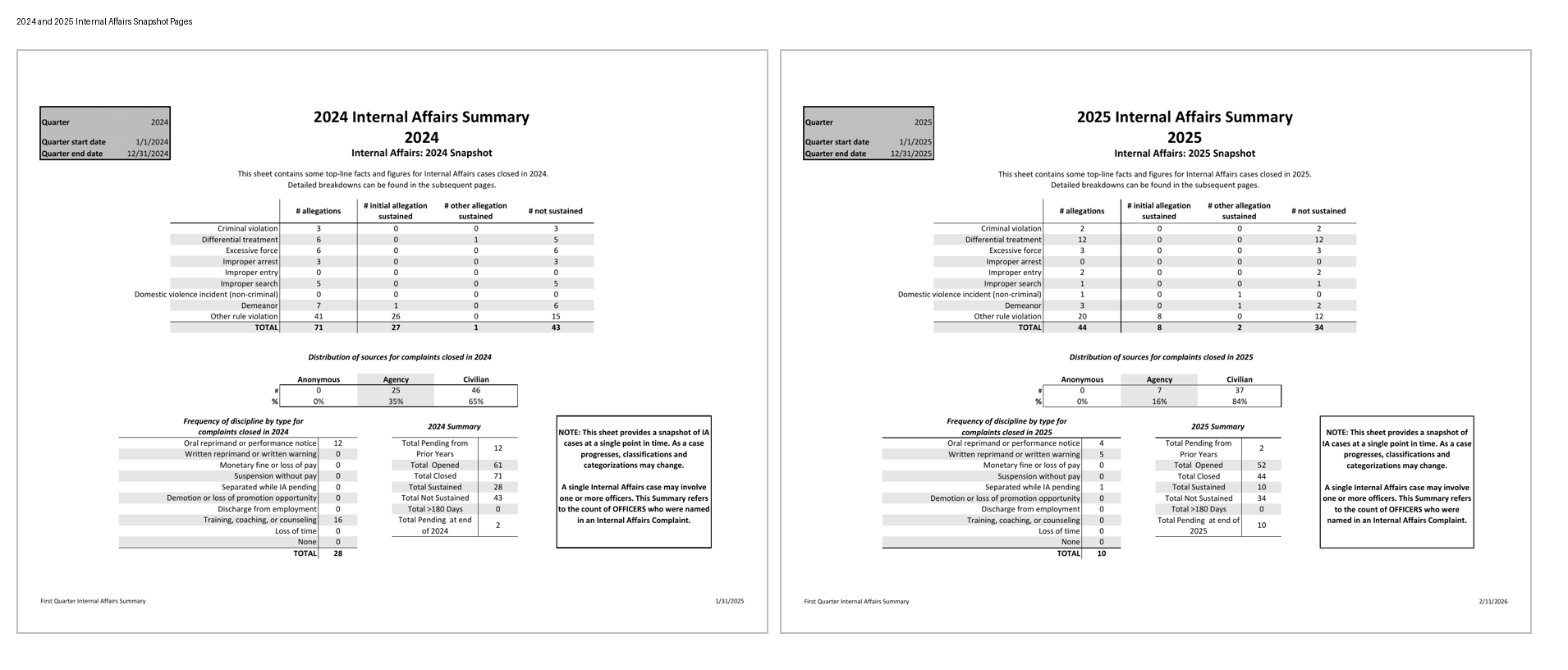
CHERRY HILL, NJ—Cherry Hill Police closed 71 internal affairs cases in 2024 and 44 in 2025, according to annual reports that show most closed complaints came from civilians. The records also outline how residents can file a complaint, what the department’s findings mean, and how discipline is tracked in the aggregate.
Cherry Hill Police closed 71 internal affairs cases in 2024 and 44 in 2025, according to the department’s annual reports. In both years, most closed complaints came from civilians, and the share of sustained cases fell from 35 percent in 2024 to 16 percent in 2025. The reports also say they are snapshots taken at a single point in time, that classifications can change as a case moves forward, and that a single case may involve more than one officer.
The reports offer a public look at how Cherry Hill tracks complaints against officers, how those complaints are classified, and what kinds of discipline were imposed in the aggregate. They also show an important limitation: the totals reflect officers named in complaints, not necessarily one separate incident for each entry.
In 2024, the department reported 46 civilian-source complaints and 25 agency-source complaints among the cases it closed. In 2025, that breakdown was 37 civilian-source complaints and 7 agency-source complaints. Both annual reports listed zero anonymous complaints in the closed-case source breakdown, even though Cherry Hill’s complaint information sheet says complaints must be accepted from any person, including anonymous sources, at any time.
How residents can file a complaint
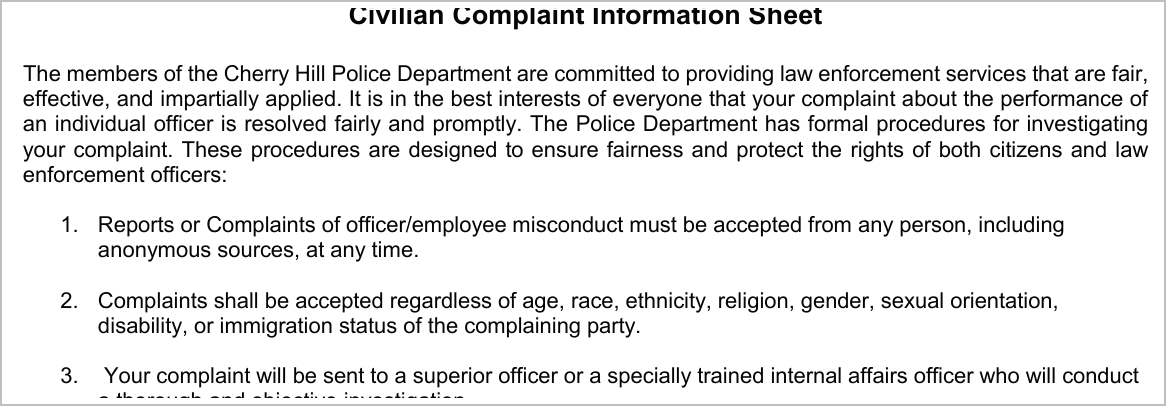
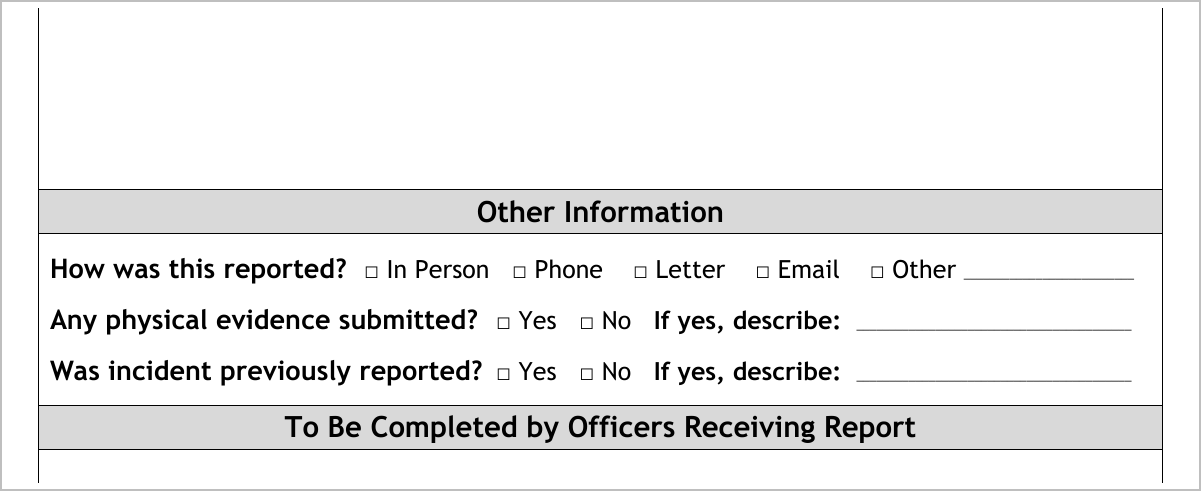
The department’s public complaint form explains how residents can file a complaint. According to Cherry Hill’s civilian complaint information sheet, complaints must be accepted regardless of a person’s age, race, ethnicity, religion, gender, sexual orientation, disability, or immigration status. The form allows complaints to be made in person, by phone, by letter, by email, or by another method. It also makes clear that a complainant does not need to know an officer’s full name or badge number and can provide whatever identifying information is available.
Once a complaint is filed, the department says it is assigned to a superior officer or a specially trained internal affairs officer for investigation. The complaint sheet says the person making the complaint may be asked to provide a statement, documents, or other evidence. If requested, and if contact information is provided, the complainant can also be told the status of the investigation and its ultimate outcome. The exact discipline imposed, however, is confidential.
What the findings mean
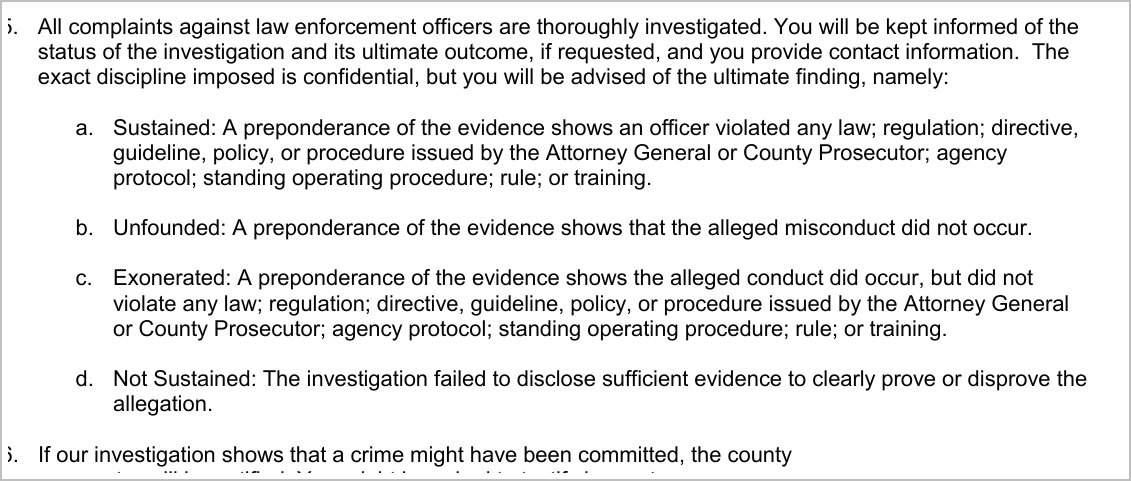
The same form defines the four findings the public is most likely to see in an internal affairs case. A complaint is sustained when the evidence shows an officer violated a law or rule. It is unfounded when the evidence shows the alleged misconduct did not occur. It is exonerated when the conduct did occur, but did not violate a law or department rule. And it is not sustained when the investigation does not produce enough evidence to clearly prove or disprove the allegation.
The department’s numbers show that most closed cases in both years ended without a sustained finding. In 2024, the report shows 35 percent sustained and 65 percent not sustained. In 2025, it shows 16 percent sustained and 84 percent not sustained.
What the discipline data shows
The reports also show what discipline looked like in broad terms. In 2024, Cherry Hill reported 28 disciplinary outcomes tied to complaints closed that year. Those included 12 oral reprimands or performance notices and 16 instances of training, coaching, or counseling. In 2025, the department reported 10 disciplinary outcomes: 4 oral reprimands or performance notices, 5 written reprimands or written warnings, and 1 separation while internal affairs was pending.
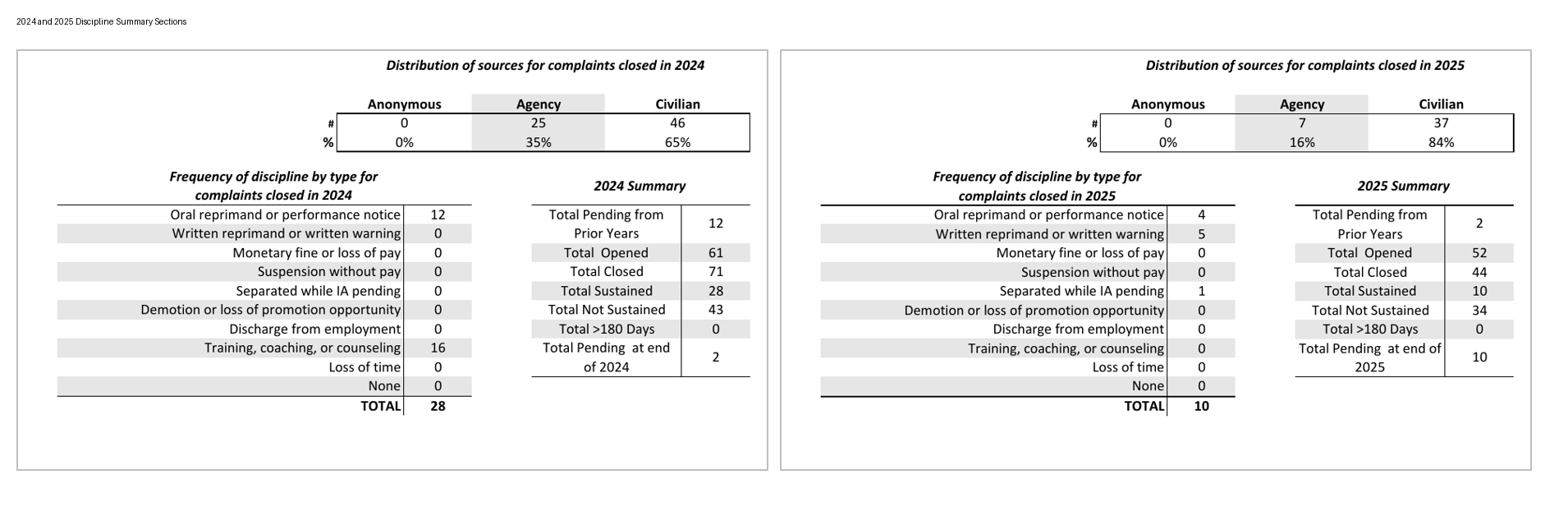
Most of that discipline was tied to what the reports classify as “other rule violation,” not more publicly visible categories such as excessive force or improper arrest. In 2024, 27 of the 28 disciplinary outcomes fell under other rule violation, with 1 tied to demeanor. In 2025, all 10 disciplinary outcomes were listed under other rule violation.
Beyond internal affairs
Cherry Hill’s published policies show that internal affairs complaints are only one part of the department’s oversight system. Its Early Warning System policy says the program is designed to detect patterns and trends before conduct grows into a more serious problem. The policy says the system is not identical to the disciplinary process and is meant primarily to address potential problems before formal discipline is warranted. It lists internal complaints, civil actions, excessive force findings, arrests of employees, positive drug tests, neglect of duty, insubordination, unexcused absences, and other indicators that may trigger review. Generally, three indicators within 12 months start the process, though the chief can order a review based on one or two indicators.
The policy says an early warning review can lead to training, retraining, counseling, intensive supervision, a fitness-for-duty exam, referral to an employee assistance program, or peer counseling. If the software flags possible misconduct, the policy says an internal investigation will be initiated.
Cherry Hill’s drug testing policy adds another layer. It says all sworn officers are subject to random drug testing and reasonable suspicion testing. At least 10 percent of sworn officers must be randomly tested each time, and random testing must happen at least twice each calendar year. The policy says a positive drug test, after final disciplinary action, can result in termination, placement in the state’s central drug registry, and a permanent bar from future law enforcement employment in New Jersey. Officers who refuse a lawful test face the same consequences.
The same policy says the department must provide annual reports to the Camden County Prosecutor’s Office showing the dates of testing, the total number of sworn officers employed, the total number tested, and the number who tested positive. Those annual reports, the policy says, must also be made available to the public upon request and posted on the agency website.
Taken together, Cherry Hill’s annual reports and policies give residents a basic roadmap of how the complaint system works. They show where complaints came from, how often cases were sustained, what the findings mean, and what discipline looked like at a department-wide level. They also show the limits of what the public can see: individual disciplinary details remain confidential, while the annual reports provide only an aggregate view.
Residents with questions about a complaint can contact Cherry Hill Police Internal Affairs at 856-488-7815, according to the department’s complaint information sheet.
Stay Informed
Get our latest investigative stories delivered directly to your inbox. No spam, just quality journalism.
Tags
Comments (0)
Sign in to join the conversation
No comments yet. Be the first to share your thoughts!
More Stories
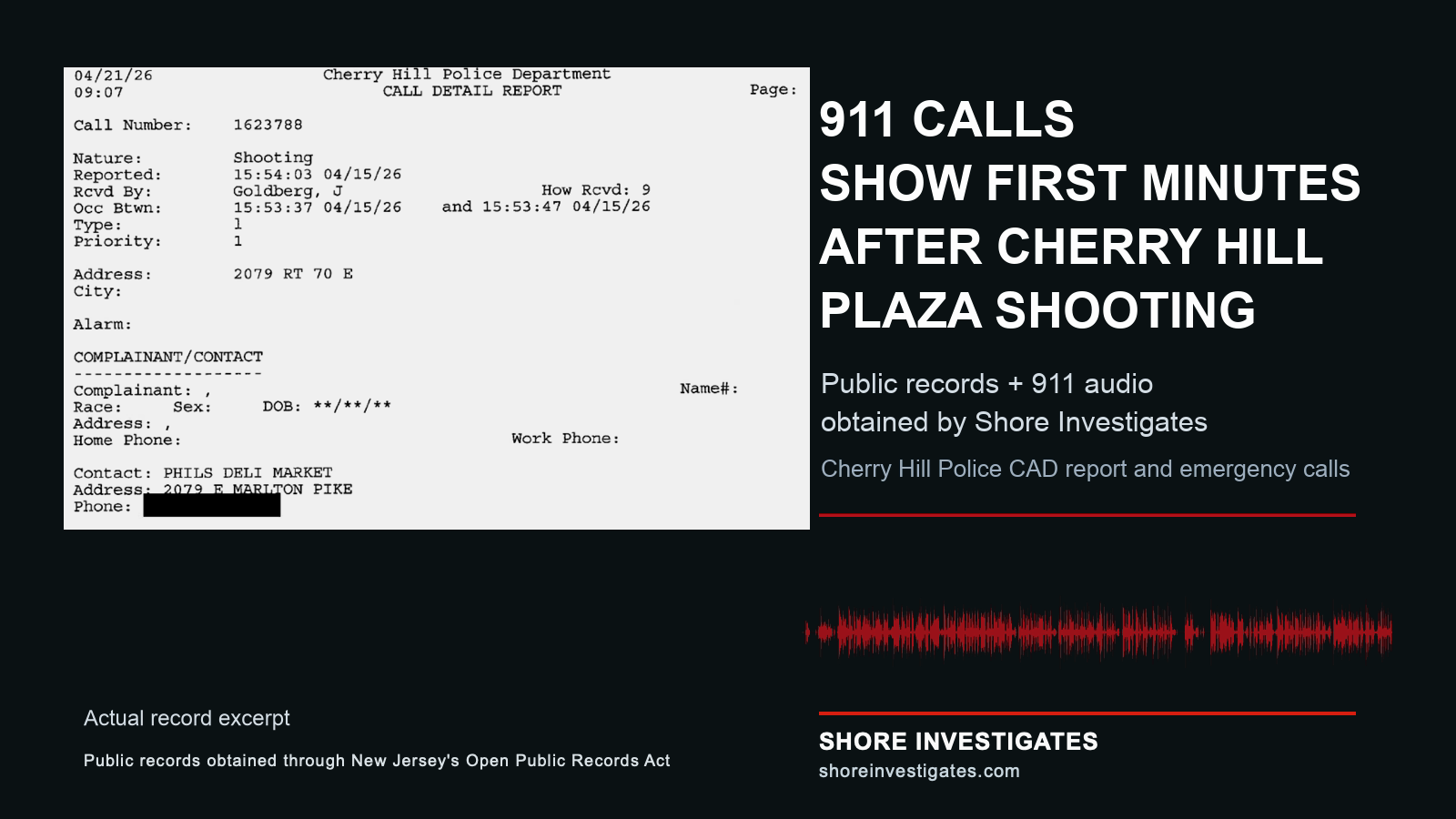
911 Calls, Police Logs Show First Minutes After Cherry Hill Shopping Plaza Shooting
Public records obtained by Shore Investigates show the first minutes after a man was reported shot outside a Cherry Hill shopping plaza. The 911 calls and dispatch records show how the response unfolded before police and prosecutors announced charges two days later.
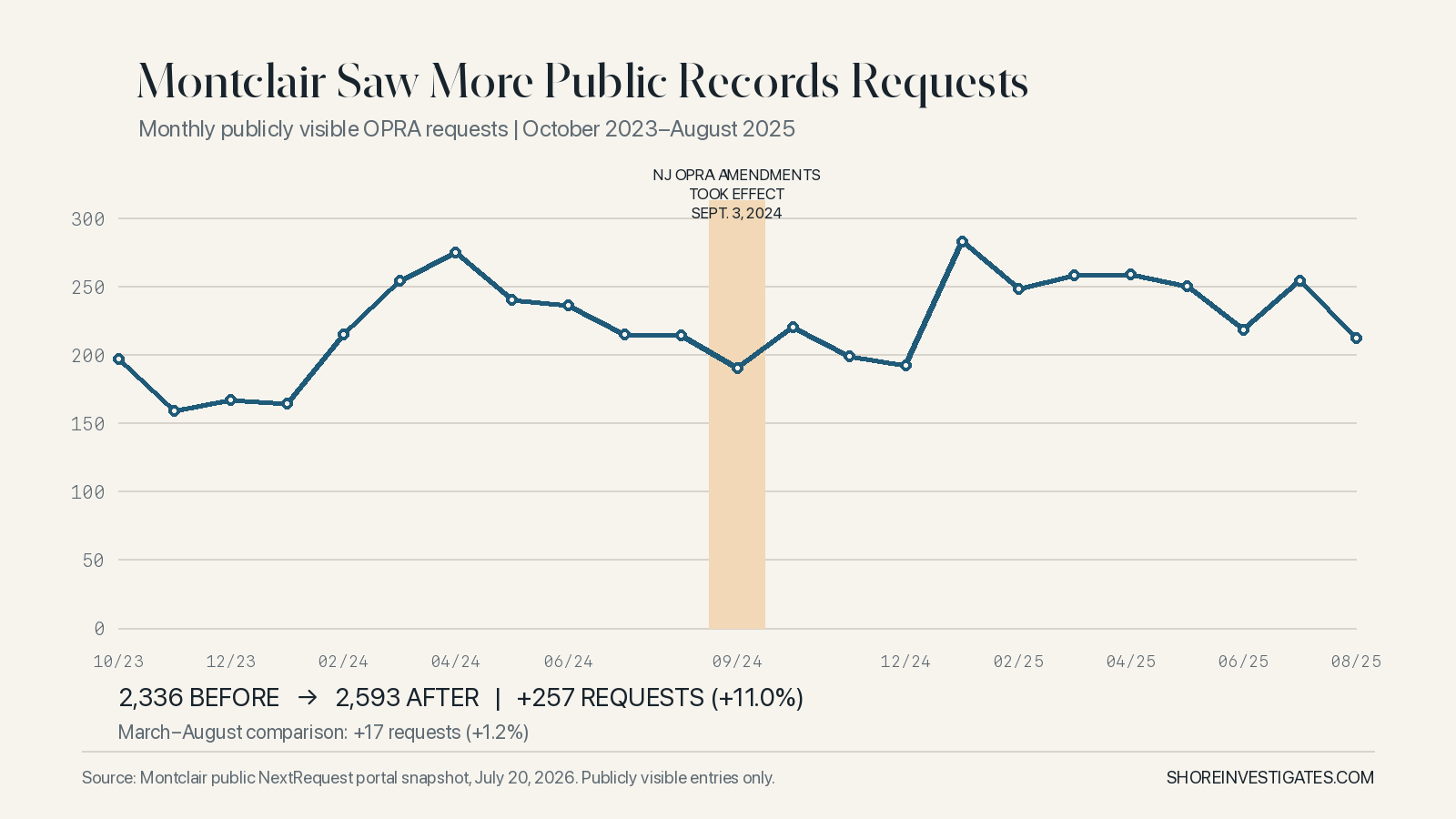
Montclair Saw More Public Records Requests After New Jersey Changed OPRA
Montclair’s public portal recorded 257 more requests in the 11 months after New Jersey’s 2024 OPRA amendments—an 11% increase.

People Seeking Help Quitting Nicotine Say New Jersey’s Quitline Link Routed Them to a Scam Pitch Line
It starts on an official New Jersey government page, then sends desperate people to a quitline website. One tap on “Call Now,” and some callers say they’re hit with “special offers” for people over 50 and prompts to hand over personal information.